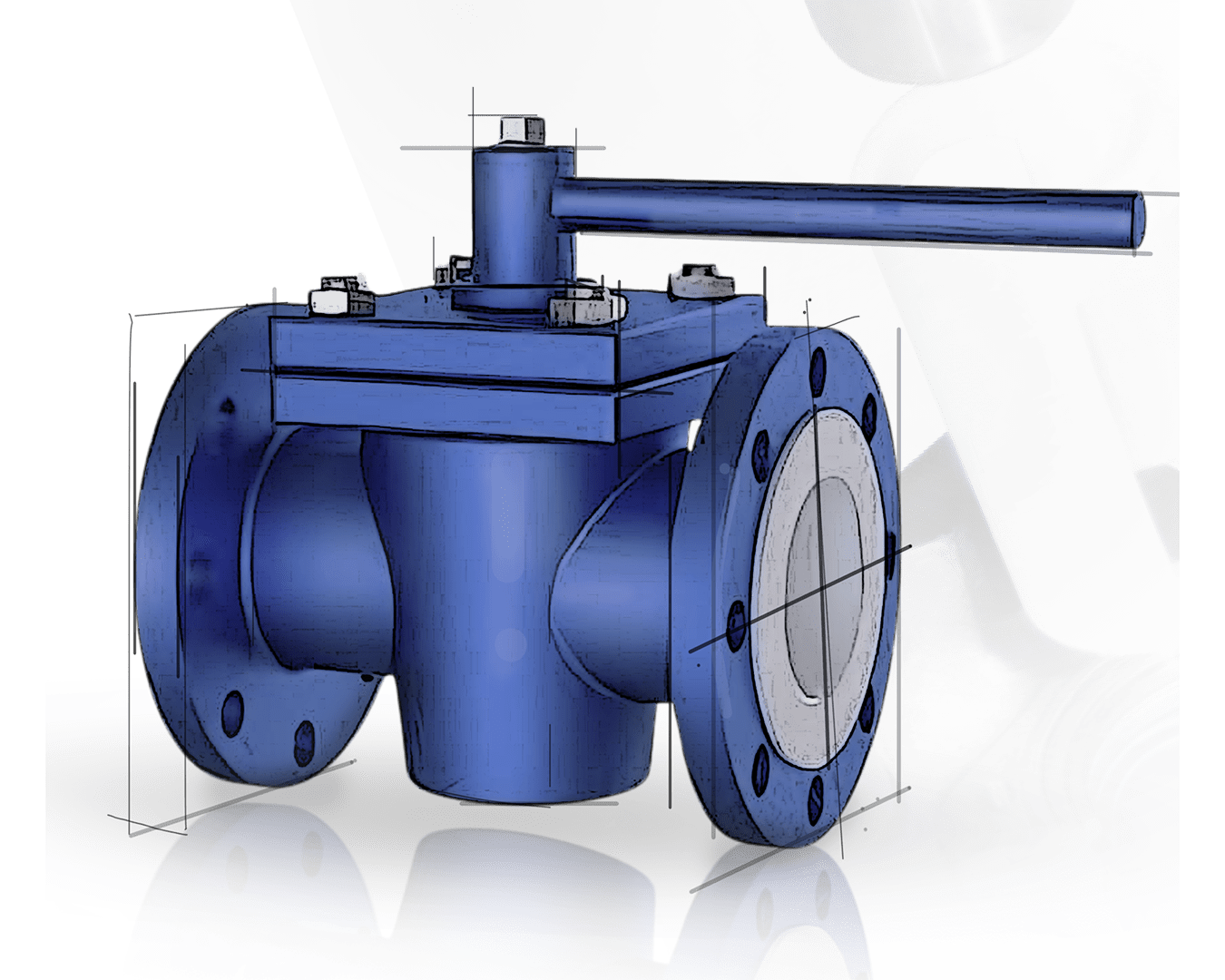
Plug valves are integral components in many fluid-handling systems, valued for their simplicity, tight shutoff, and durability. By rotating a cylindrical or tapered plug within a valve body, flow is permitted or obstructed. Over the years, plug valve design has evolved, and today’s models serve critical roles in oil and gas, chemical processing, water treatment, and numerous other industries. This article explores plug valve technology, outlining its construction, operation, advantages, common applications, and maintenance guidelines.
1. Construction and Working Principle
A plug valve consists of three primary components:
-
Valve Body: Typically made from carbon steel, stainless steel, or alloy materials, it houses the plug and ports.
-
Plug: Shaped like a cylinder or a truncated cone, this component has one or more hollow passages (ports) that align with inlet and outlet openings when rotated.
-
Actuator (Handle or Gearbox): A lever or gearbox that facilitates manual or automated rotation of the plug.
Working Principle
-
In the open position, the plug’s hollow passage aligns with the valve’s inlet and outlet ports, allowing fluid to pass straight through with minimal turbulence.
-
In the closed position, the solid exterior of the plug blocks the flow path, achieving a tight seal that prevents leakage.
-
By rotating the plug 90 degrees (in quarter-turn plug valves) or through multiple detents (in multi-turn designs), operators can regulate flow or completely isolate a section of piping.
Because there are no intricate stem seals or packing arrangements, plug valves offer fewer leak paths compared to other valve types. A simple lubricant or resilient insert can enhance sealing performance.
2. Types of Plug Valves
Several plug valve designs address distinct operational requirements:
-
Lubricated Plug Valves
-
A cavity between the plug and body is filled with a lubricant.
-
Lubricant acts as a barrier against corrosive media and improves sealing.
-
Commonly used for high-pressure or abrasive services.
-
-
Non-Lubricated (Resilient Seated) Plug Valves
-
Plug seats feature synthetic materials like PTFE or reinforced elastomers.
-
No external lubrication is needed, minimizing environmental contamination.
-
Preferred for sanitary or corrosive applications.
-
-
Eccentric Plug Valves
-
The plug is offset from the valve body’s centerline.
-
As the plug rotates, it lifts slightly, reducing friction and wear.
-
Ideal for high-temperature, high-pressure services where standard designs may seize.
-
-
Multi-Port (3-Way or 4-Way) Plug Valves
-
Equipped with multiple flow passages to direct fluid among three or more ports.
-
Suitable for mixing, diverting, or bypass applications in chemical plants and refineries.
-
3. Key Advantages
Plug valves are chosen over other valve types for several advantages:
-
Simple, Robust Construction
-
Fewer moving parts lead to reduced maintenance and longer service life.
-
Easy disassembly for inspection or repair.
-
-
Fast Quarter-Turn Operation
-
Provides quick open/close control, reducing actuation time.
-
Supports automation with electric or pneumatic actuators.
-
-
Tight Shutoff
-
When properly maintained, plug valves achieve bubble-tight sealing.
-
Resilient seats and lubricated designs minimize leakage.
-
-
Low Pressure Drop
-
The straight-through flow path in the open position minimizes turbulence.
-
Results in energy savings and stable process control.
-
-
Versatility in Media
-
Resistant to corrosive chemicals, slurries, and hydrocarbons.
-
Material selection (stainless steel, exotic alloys) further expands compatibility.
-
4. Common Applications
Due to their rugged performance and tight shutoff, plug valves are used in:
-
Oil and Gas Production
-
Wellhead control, pipeline isolation, and manifold systems.
-
Abrasion-resistant designs manage sand-laden or particulate-laden service.
-
-
Chemical and Petrochemical Processing
-
Sampling, blending, or diverting streams.
-
High-pressure, high-temperature reactors and distillation columns.
-
-
Water and Wastewater Treatment
-
Sludge handling, slurry transport, and filtration systems.
-
Non-lubricated plug valves avoid contamination in potable water lines.
-
-
Power Generation
-
Feedwater, steam control, and cooling circuits.
-
Eccentric plug valves handle superheated steam reliably.
-
-
Mining and Minerals
-
Tailings lines, slurry pipelines, and acid leaching operations.
-
Durable materials resist acidic or abrasive conditions.
-
5. Maintenance Best Practices
Regular maintenance ensures plug valves remain reliable and leak-free:
-
Periodic Inspection
-
Inspect the valve body and plug surface for scoring, corrosion, or wear.
-
Check actuator mechanisms (hand lever or gearbox) for smooth operation.
-
-
Lubrication (for Lubricated Designs)
-
Replenish valve lubricant at recommended intervals.
-
Use manufacturer-approved lubricants to maintain seal integrity and prevent chemical incompatibility.
-
-
Seat Replacement
-
For resilient seated valves, replace PTFE or elastomer inserts when signs of deformation are detected.
-
Ensure replacement seats match the original specifications for material and hardness.
-
-
Cleaning and Debris Removal
-
Flush pipelines prior to disassembly to remove particulates that can scratch plug surfaces.
-
Use mild solvents or water jets to clear residues before reassembly.
-
-
Torque and Actuator Checks
-
Verify that actuators are supplying adequate torque to achieve bubble-tight sealing.
-
Adjust or calibrate pneumatic or electric actuation systems as needed.
-
-
Documentation and Testing
-
Record all maintenance activities, torque settings, and part replacements.
-
Conduct periodic seat-leakage tests or pressure-hold tests to confirm integrity.
-
6. Conclusion
Plug valves provide a combination of simplicity, reliability, and versatility that few other valve types can match. By selecting the right design—lubricated, non-lubricated, or eccentric—engineers can address diverse operational requirements, from high-pressure oil and gas pipelines to corrosive chemical services. Proper maintenance, including lubrication, seat replacement, and actuator calibration, extends valve life and prevents unplanned downtime. As industries continue to demand efficient, leak-free fluid control solutions, plug valves will remain a preferred choice among valve technologies.