Showing posts with label non lubricated plug valve manufacturer in India. Show all posts

Wednesday, 24 June 2026

Plug Valves in Oil & Gas: Why They Remain a Preferred Choice for Flow Control

 In the oil and gas industry, every valve specification decision carries weight. Unplanned shutdowns, fugitive emissions, and fluid contamination are not just operational problems — they are safety and compliance risks. Among the various valve types used in upstream, midstream, and downstream operations, plug valves have earned a consistent place in critical flow control applications.

This article explores the design, advantages, and ideal use cases of plug valves in oil and gas — and why specifying the right type matters for long-term plant reliability.

What Is a Plug Valve?

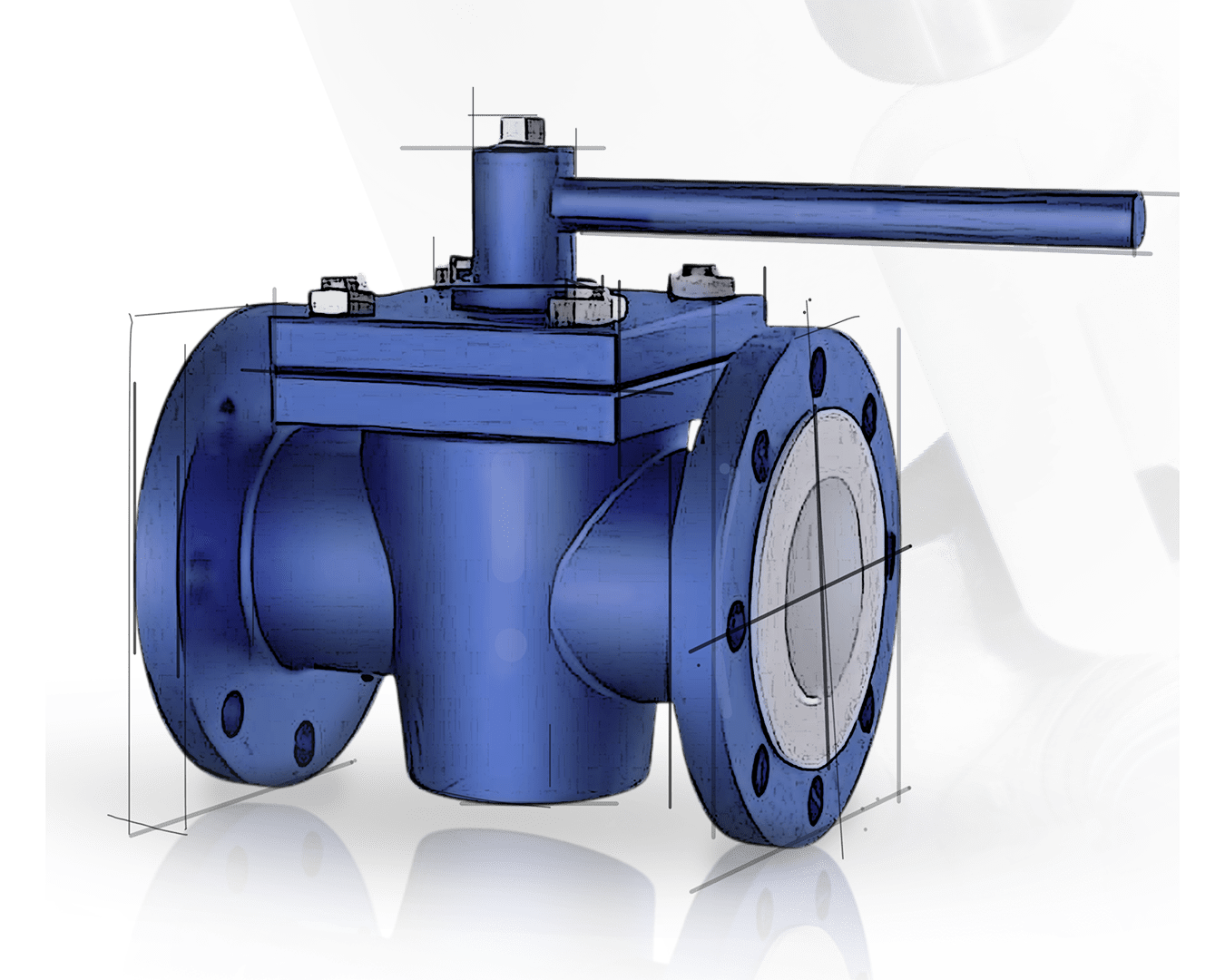
A plug valve is a quarter-turn rotary valve that uses a cylindrical or tapered plug to control the flow of fluid through the valve body. When the plug is rotated 90°, the port aligns with the pipeline bore to allow full flow; rotating it back blocks the flow completely.

Plug valves are available in lubricated, non-lubricated, eccentric, and multi-port configurations — each suited to specific process conditions.

Why Oil & Gas Applications Favour Plug Valves

1. Tight Shutoff in High-Pressure Lines
Plug valves deliver reliable shutoff in high-pressure crude, gas, and condensate lines. Lubricated plug valves, in particular, create a sealant film between the plug and body, reducing friction while maintaining a leak-tight seal — critical for upstream wellhead and pipeline isolation.

2. Low Pressure Drop
With a straight-through bore design, plug valves offer minimal resistance to flow. This makes them a preferred choice in long-distance pipeline applications where pressure loss must be controlled.

3. Suitability for Abrasive and Viscous Media
Crude oil, slurries, and process fluids with suspended solids can quickly damage standard gate or ball valves. Plug valves — especially lubricated types — handle these media effectively without significant wear to the sealing surfaces.

4. Multi-Port Configurations for Flow Diversion
Three-way and four-way plug valves allow operators to divert, mix, or isolate multiple flow streams with a single valve. This is particularly useful in refinery and gas processing units where flow routing flexibility is required.

5. API 6D Compliance
Pipeline plug valves are manufactured and tested per API 6D — the standard for pipeline and piping valves used in the petroleum and natural gas industries. Compliance ensures dimensional consistency, pressure testing, and traceability.

Key Applications in Oil & Gas

  • Wellhead isolation and production header manifolds
  • Pipeline pig launchers and receivers
  • Gas processing unit inlet and outlet isolation
  • Crude oil transfer and storage terminal operations
  • LNG facility flow control and isolation

Lubricated vs. Non-Lubricated Plug Valves: Which to Specify?

ParameterLubricatedNon-Lubricated
MediaCrude, heavy hydrocarbons, slurriesClean gas, light hydrocarbons
SealingSealant-injected, periodic maintenancePTFE sleeve or elastomer liner
Operating TorqueHigher (sealant reduces friction)Lower
MaintenancePeriodic sealant injection requiredMinimal

For upstream and pipeline applications with dirty or abrasive media, lubricated plug valves are the standard choice. Non-lubricated variants work well in clean gas service where maintenance access is limited.

Material and Standards Considerations

Plug valves for oil and gas service are typically specified in:

  • Body materials: Carbon steel (ASTM A216 WCB), alloy steel, stainless steel
  • Trim materials: Stainless steel, Monel, Inconel for sour service
  • Standards: API 6D, ASME B16.34, NACE MR0175 (for H₂S environments)

For sour gas service, NACE MR0175/ISO 15156 compliance is mandatory to prevent sulphide stress cracking in valve components.

Conclusion

Plug valves occupy a specific and well-justified position in oil and gas flow control. Their ability to handle abrasive media, provide reliable shutoff, and offer multi-port configurations makes them indispensable in both pipeline and plant applications.

At Freture Techno, we manufacture plug valves compliant with API 6D and ASME B16.34, built for the demanding conditions of upstream, midstream, and downstream oil and gas operations. Contact us to discuss your application requirements.

Saturday, 25 April 2026

Lubricated vs Non-Lubricated Plug Valves – Which One Should You Choose?

When selecting the right Plug Valve for industrial applications, one question often arises: should you choose a lubricated or non-lubricated plug valve? While both serve the same basic function, their performance, maintenance, and applications differ significantly.

Understanding these differences can help you make a smarter and more cost-effective decision.

Understanding Plug Valve Basics

A Plug Valve is a quarter-turn valve that controls flow using a rotating plug. Its design allows for quick shutoff and reliable sealing, making it suitable for various industries, including oil & gas, chemicals, and water treatment.

But the real distinction lies in how the plug interacts with the valve body.

What is a Lubricated Plug Valve?

A lubricated plug valve uses a special lubricant injected between the plug and the body. This lubricant reduces friction and helps create a tight seal.

Key Advantages:

  • Enhanced sealing performance
  • Suitable for high-pressure applications
  • Reduced wear due to lubrication

Limitations:

  • Requires regular maintenance and lubrication
  • Not ideal for applications where contamination must be avoided

What is a Non-Lubricated Plug Valve?

A non-lubricated plug valve relies on advanced materials and coatings instead of external lubrication. Materials like PTFE sleeves are commonly used to reduce friction and ensure sealing.

Key Advantages:

  • Low maintenance (no lubrication required)
  • Cleaner operation—ideal for sensitive industries
  • Better suited for corrosive environments

Limitations:

  • May have limitations in extremely high-pressure conditions
  • Slightly higher initial cost

Key Differences at a Glance

FeatureLubricated Plug ValveNon-Lubricated Plug Valve
Sealing MethodLubricant-basedSleeve/lining-based
MaintenanceHighLow
ApplicationOil & Gas, High PressureChemical, Clean Systems
Leakage ControlExcellentExcellent
Operational CleanlinessModerateHigh

Which Plug Valve Should You Choose?

The right choice depends on your application:

  • Choose a lubricated plug valve if you are dealing with high-pressure hydrocarbon systems where strong sealing is required.
  • Opt for a non-lubricated plug valve if your application involves corrosive chemicals or clean processes where contamination must be avoided.

Applications Across Industries

Both types of Plug Valves are widely used across industries:

  • Oil & Gas pipelines
  • Chemical processing plants
  • Water treatment facilities
  • Petrochemical industries
  • Power generation units

Each application demands specific valve characteristics, making it essential to select the right type.

Conclusion

Choosing between lubricated and non-lubricated Plug Valves is not about which one is better—it’s about which one is right for your application. By understanding their differences in sealing, maintenance, and performance, industries can ensure better efficiency, safety, and long-term reliability.

A well-selected plug valve not only improves process control but also reduces downtime and operational costs—making it a valuable investment for any industrial system.

Monday, 7 July 2025

The Role of Non Lubricated Plug Valves in Chemical Processing Plants

 In chemical manufacturing, where corrosive fluids, high temperatures, and stringent safety regulations define daily operations, choosing the right valve is critical. Among various flow control options, the non lubricated plug valve has become a trusted solution, offering a clean, low-maintenance, and leak-free alternative to traditional valves. These valves are ideal for high-purity and corrosive fluid applications, making them invaluable in chemical processing facilities.

What Is a Non Lubricated Plug Valve?

A non lubricated plug valve is a quarter-turn rotary valve with a tapered or cylindrical plug that controls the flow of fluids. Unlike lubricated plug valves, these valves use a sleeve (typically PTFE or other polymer) around the plug, eliminating the need for grease or oil. This design allows for smoother operation, better chemical resistance, and reduced risk of product contamination—an essential feature in the chemical industry.


Why Chemical Industries Prefer Non Lubricated Plug Valves

The benefits of using non lubricated plug valves in chemical plants include:

  • Zero grease contamination: No risk of lubricant leaching into the process stream.

  • Excellent corrosion resistance: Perfect for acids, alkalis, and other aggressive chemicals.

  • Low maintenance: No need for frequent lubrication or servicing.

  • Leak-proof shut-off: Minimizes the risk of leaks that could lead to hazardous spills or reactions.

  • Compact and durable: Designed for long-term performance even under tough conditions.

Key Applications in the Chemical Sector

Non lubricated plug valves are extensively used in:

  • Acid and base handling systems

  • Solvent transfer lines

  • Batch mixing and dosing stations

  • Effluent and waste treatment units

  • Chemical storage and distribution manifolds

In these critical areas, ensuring reliable shut-off and minimal contamination is essential—and non lubricated plug valves excel in meeting these standards.

SEO Long-Tail Keywords to Note:

  • non lubricated plug valve for chemical plants

  • PTFE sleeved plug valve for corrosive chemicals

  • chemical resistant plug valve manufacturers

Conclusion

For chemical processing units that demand precision, durability, and safety, the non lubricated plug valve is an indispensable component. Its maintenance-free operation and chemical resistance make it a top choice for enhancing operational efficiency and ensuring regulatory compliance.

Freture Techno Pvt. Ltd., a trusted non lubricated plug valve manufacturer in India, delivers premium quality valves designed for critical chemical applications, offering clients durable, leak-proof solutions tailored to their needs.

Multiport Plug Valves — Simplifying Flow Diversion in Process Plants

Flow diversion and mixing applications traditionally required multiple two-way valves and complex piping manifolds. Multiport plug valves co...